UX Design
UI Design
New Feature
Experimental
Note - TeamGPT was designed and documented in May 2025, six months prior to the official release of "Group Chats" by OpenAI. This exploration was built on first-principles thinking to solve for collaborative AI workflows before they became a native part of the platform.
Context
TeamGPT is a conceptual product exploration that transforms ChatGPT from a single-player utility into a shared, real-time collaborative workspace.
Problem
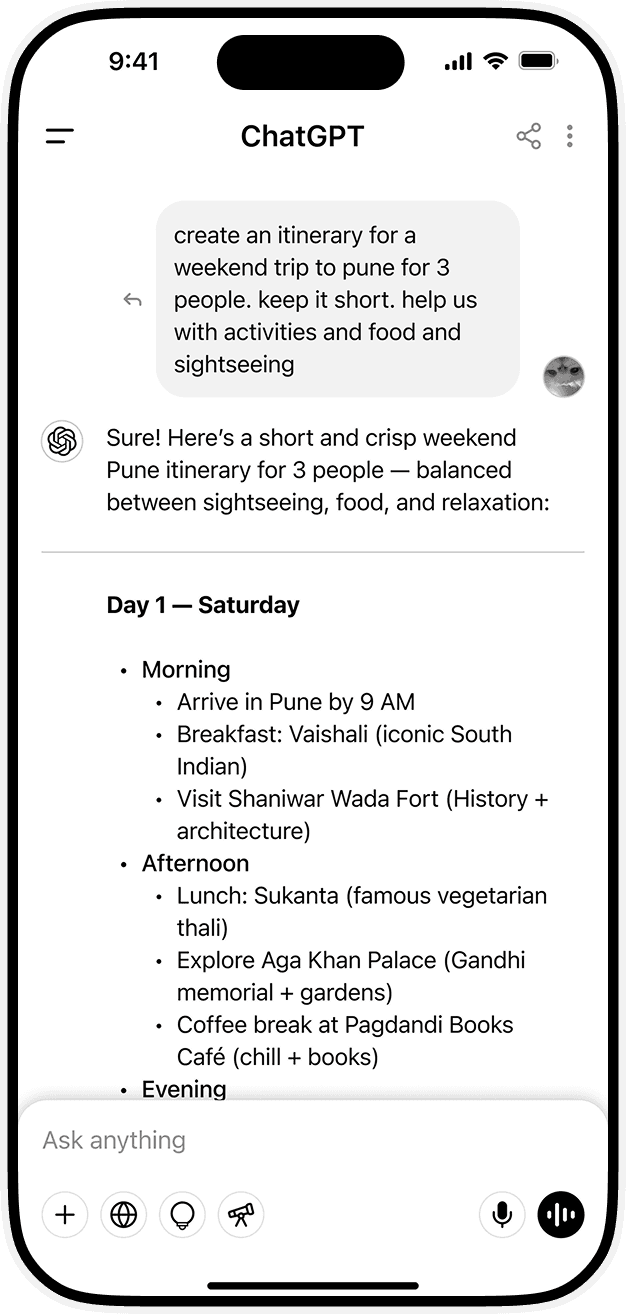
Currently, sharing a ChatGPT conversation generates an isolated, branched copy of the chat. This silos information, breaks the flow of discussion, and forces teams into fragmented workflows where they cannot seamlessly track changes or discuss prompts together.
Solution
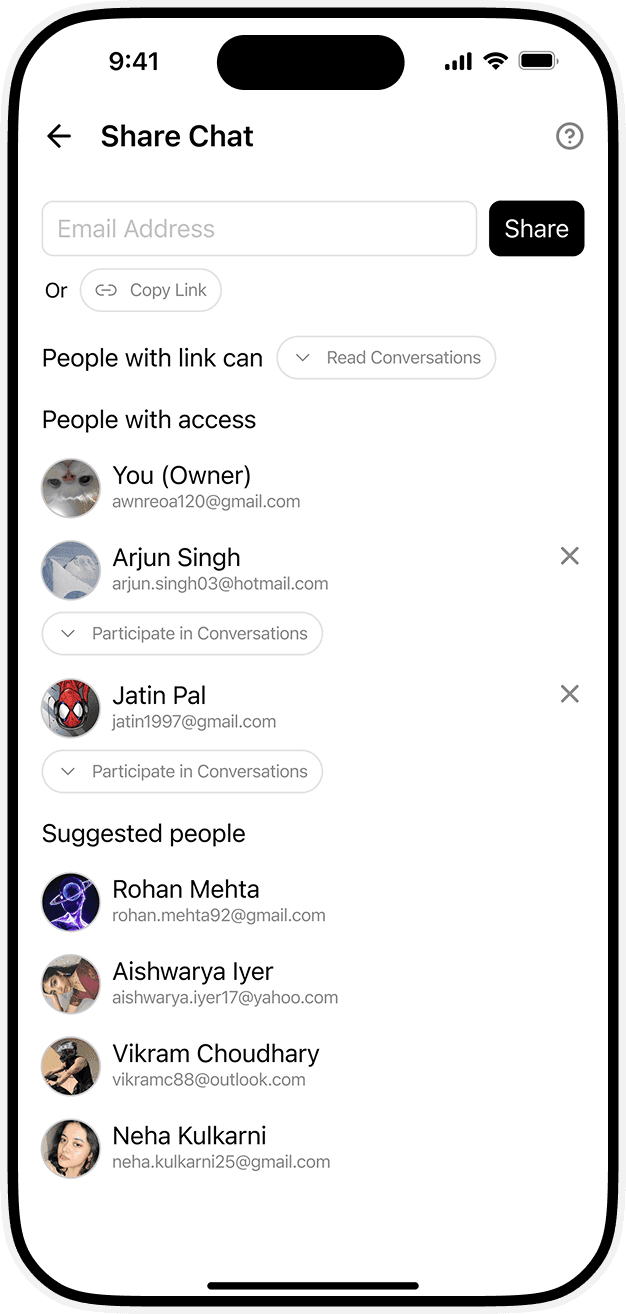
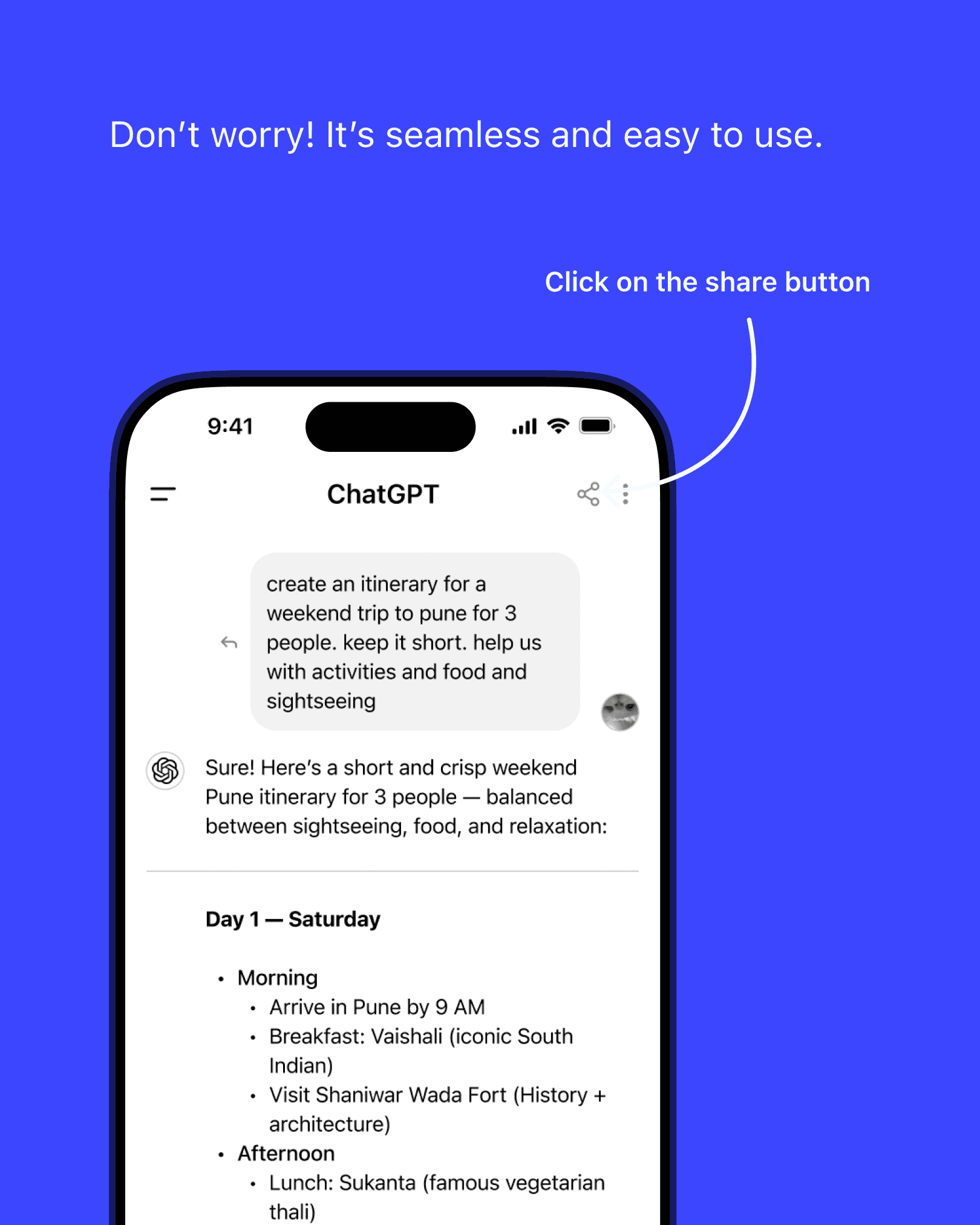
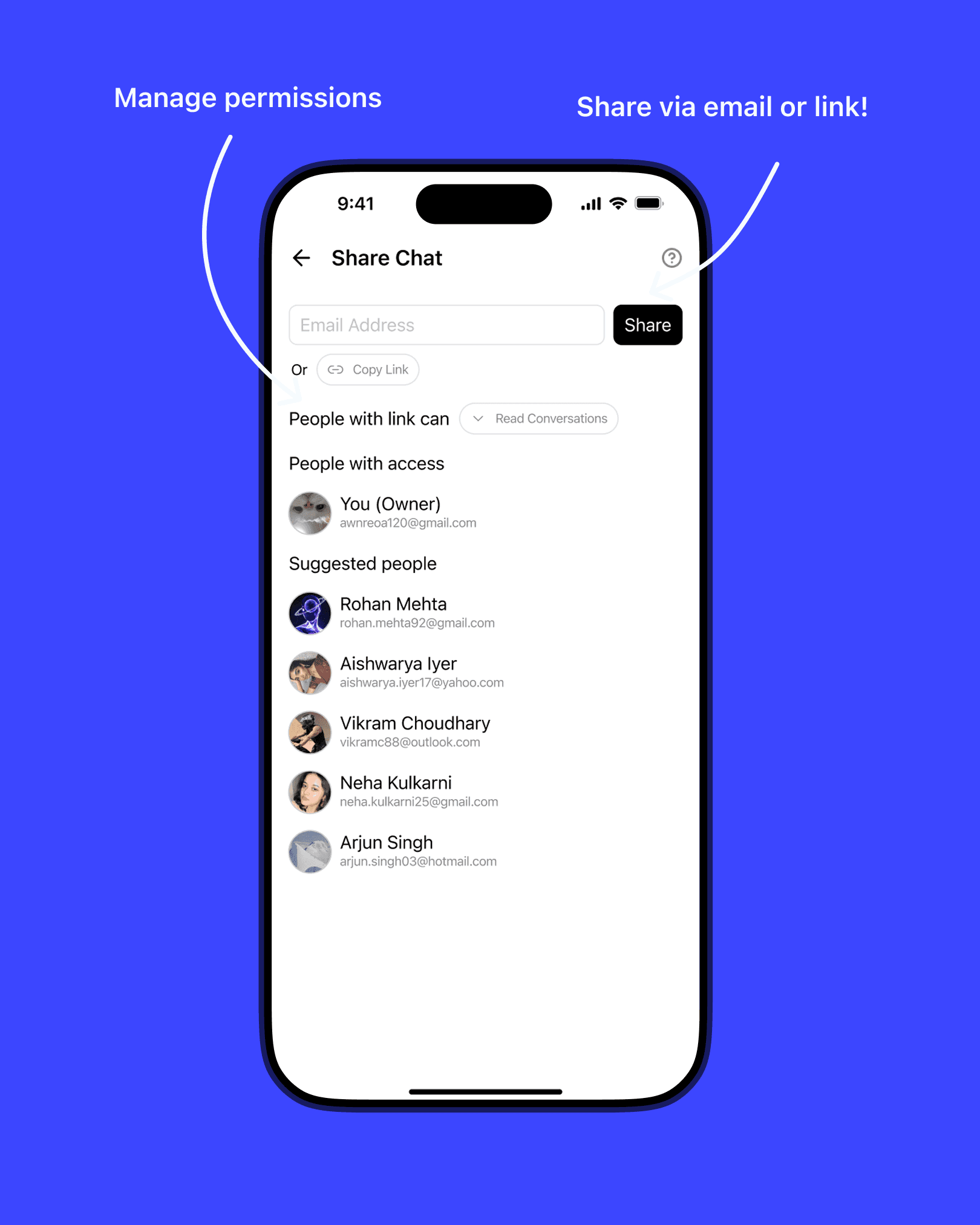
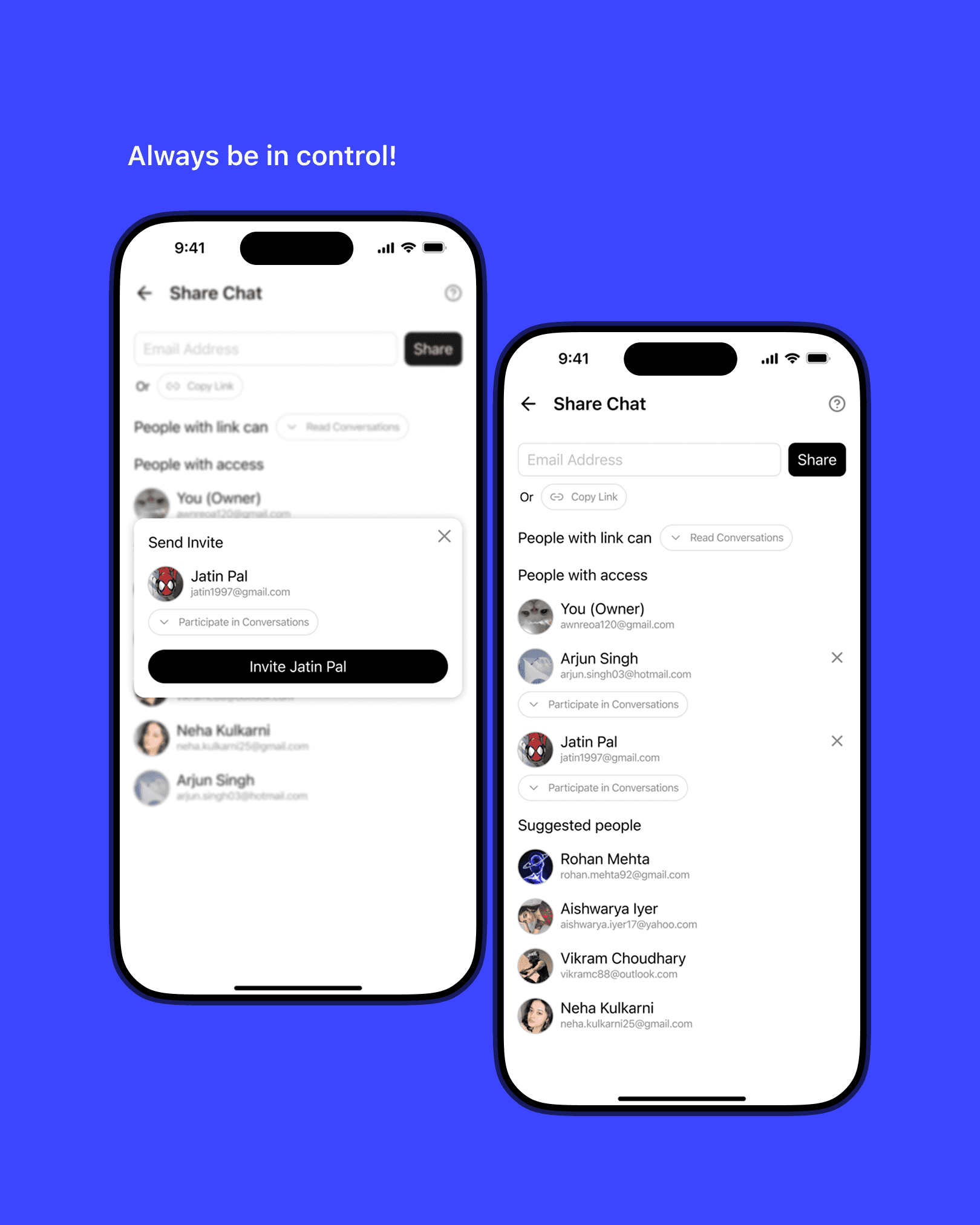
Figma-Style Permissions: Designed a frictionless sharing flow allowing users to grant view or participate access, complete with live presence indicators (green-ringed avatars) and native system notifications.
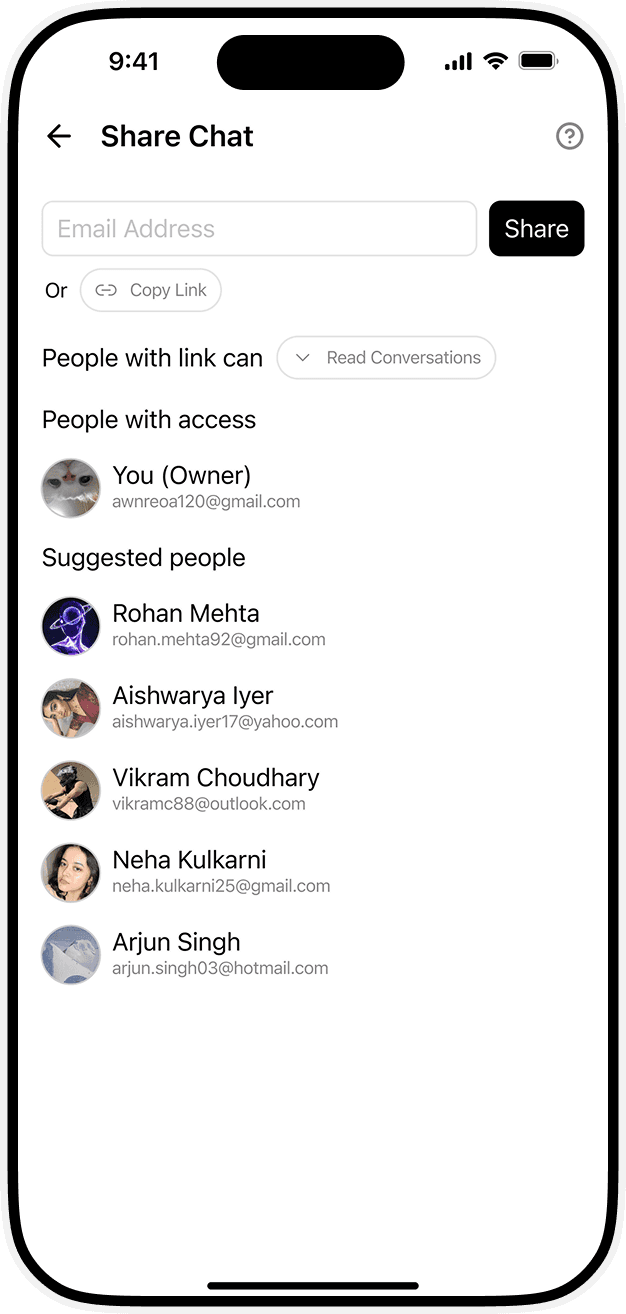
Choose whether people with the link can read or participate in the chat. You can always change it for every participant!
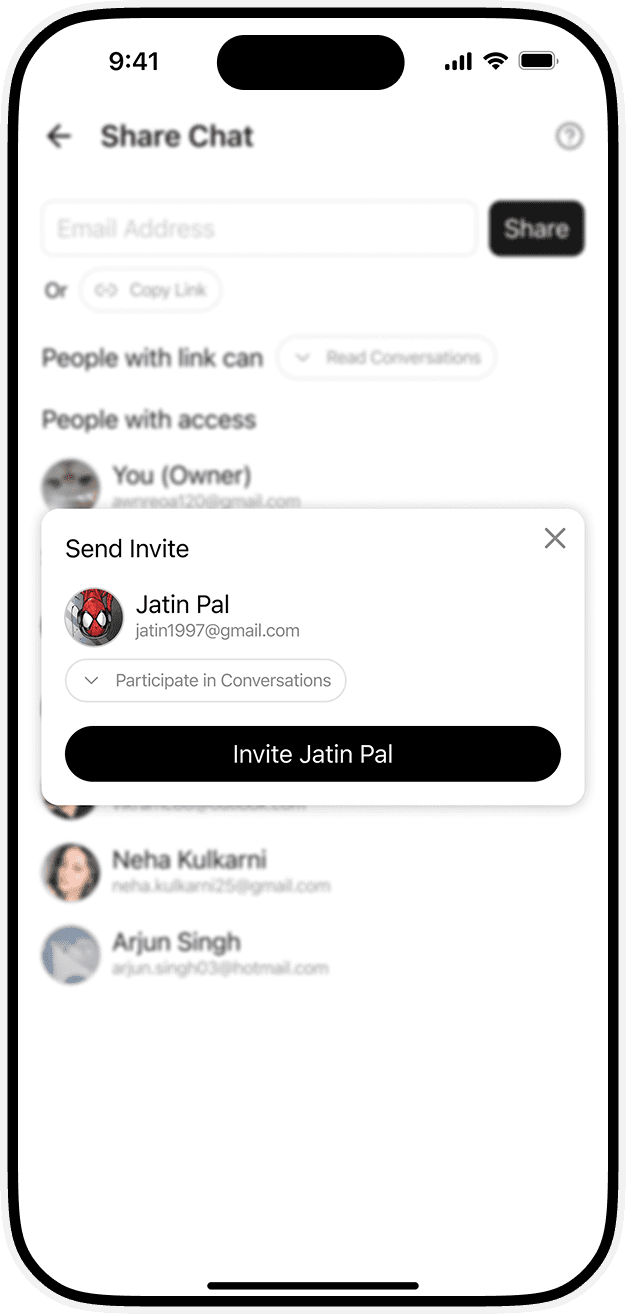
When inviting via email, a modal allows you to set custom permissions for each user.
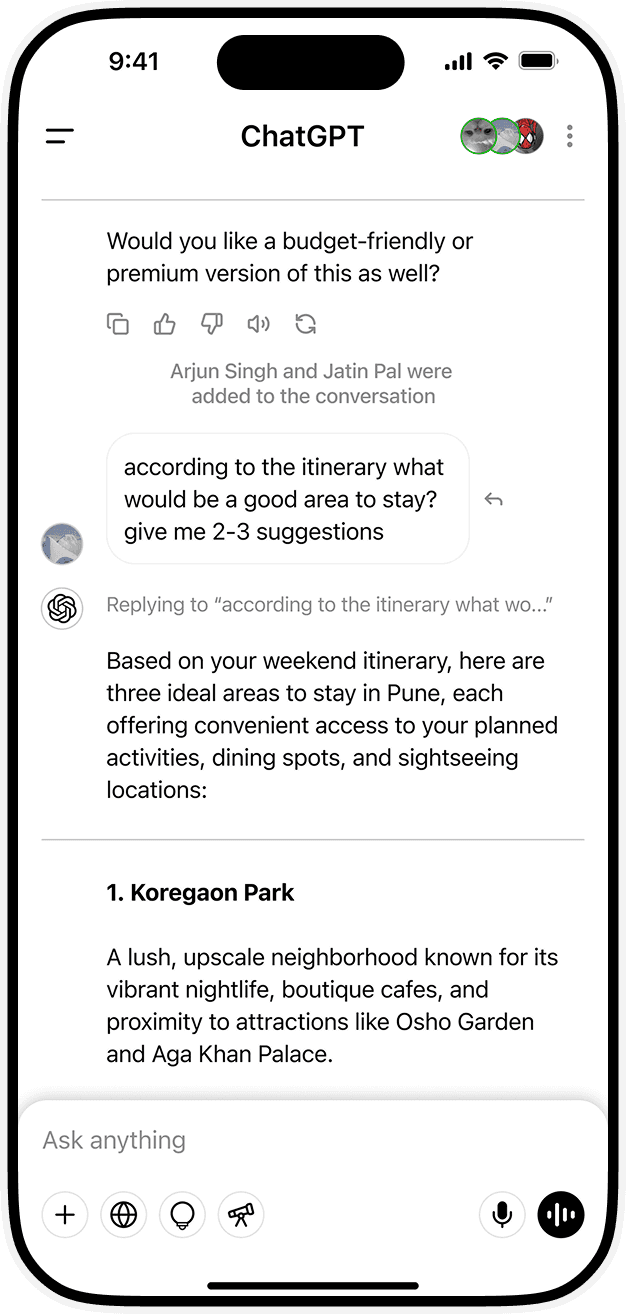
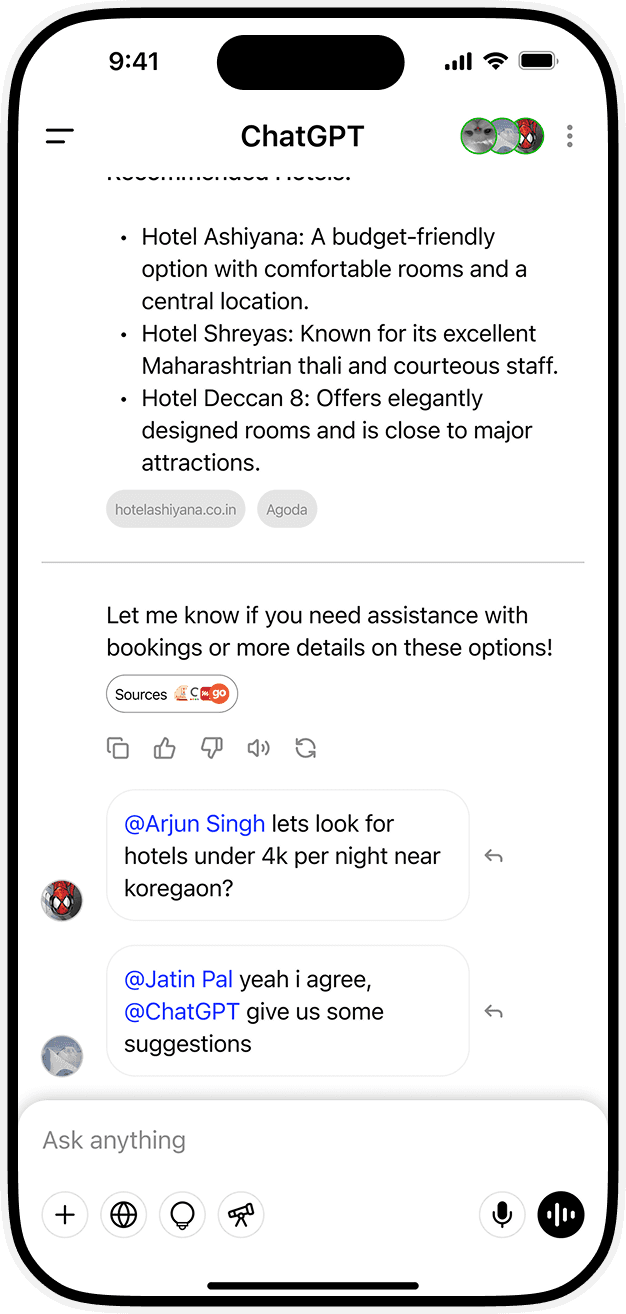
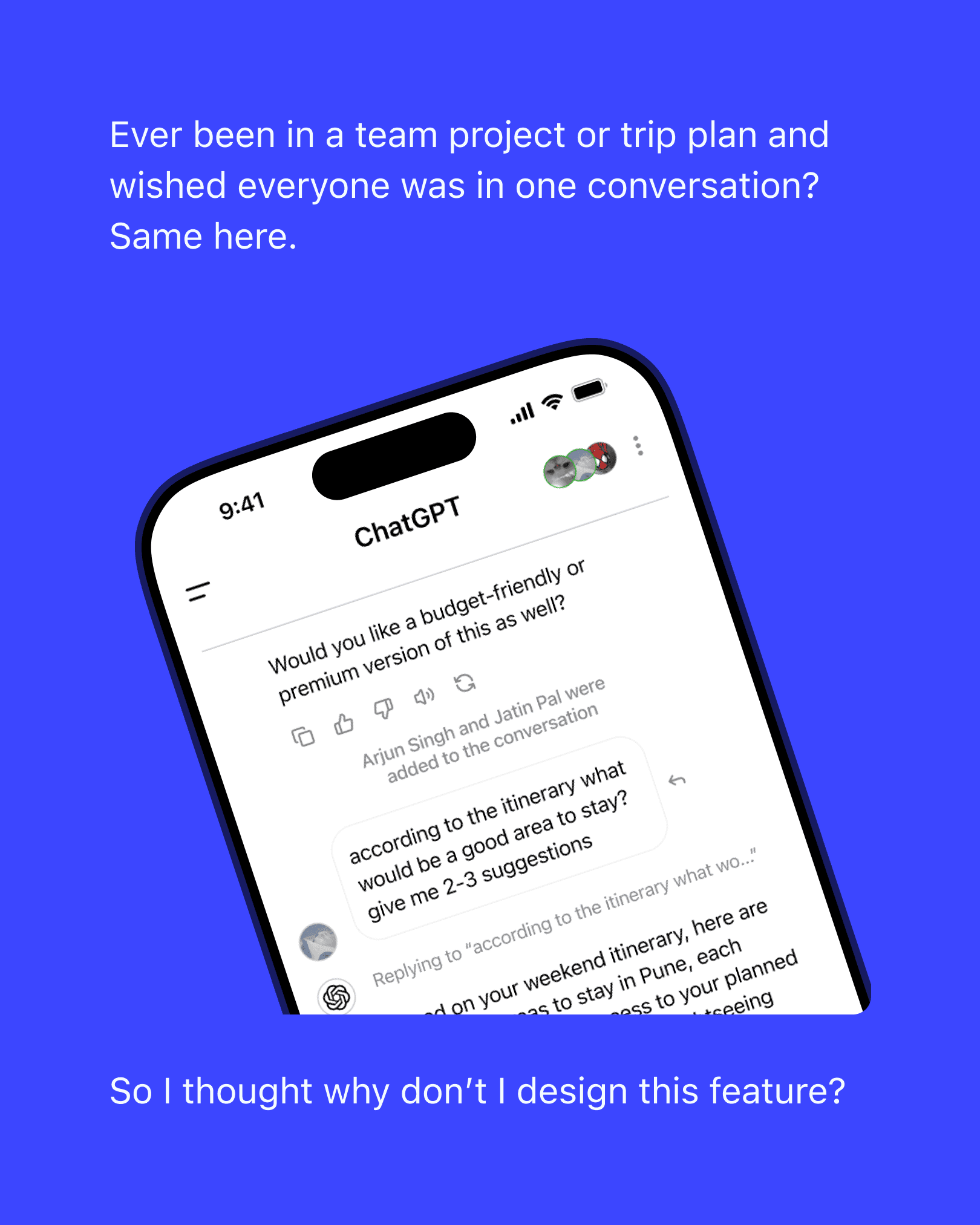
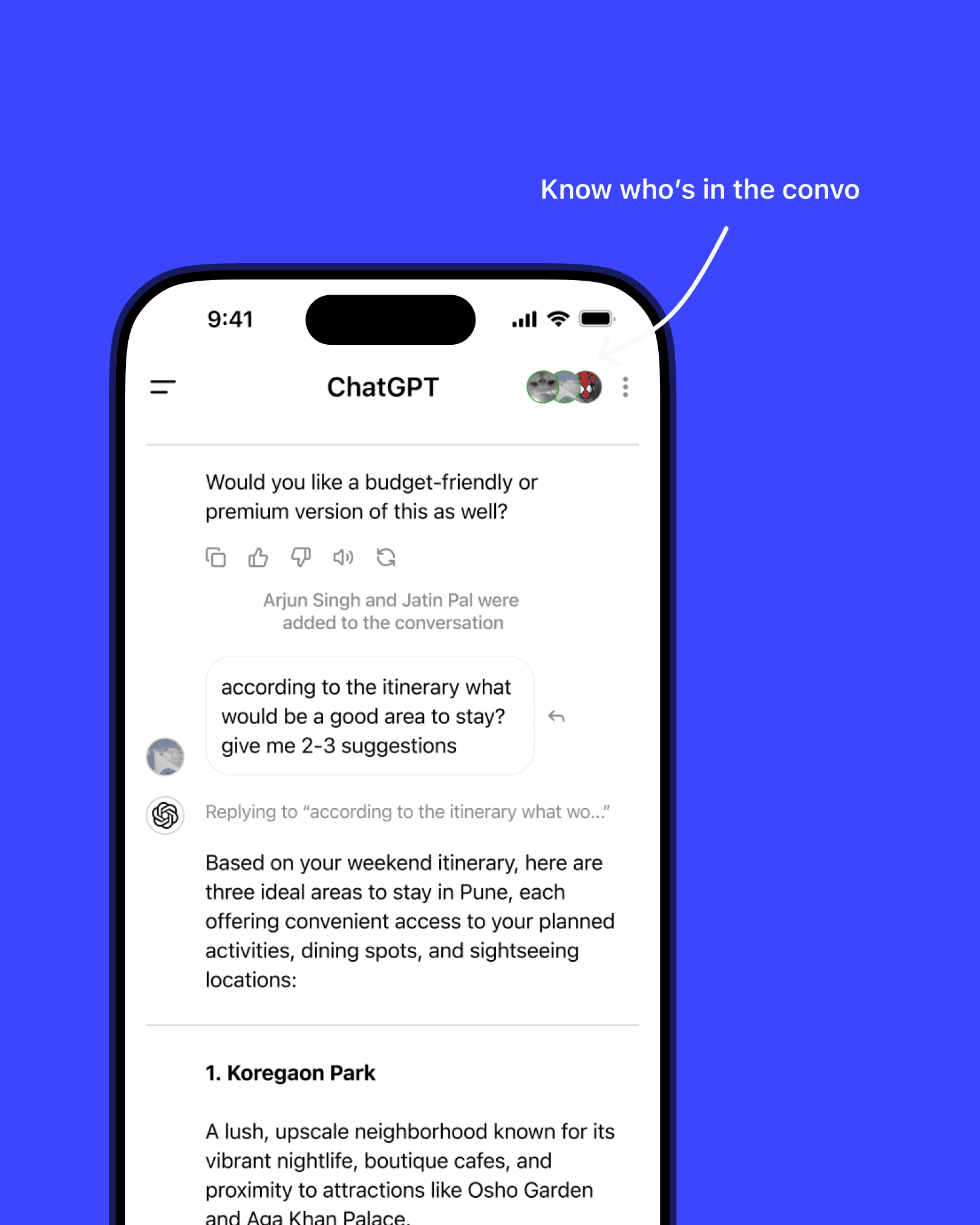
The share icon transforms into participant avatars, with green borders indicating who’s online.
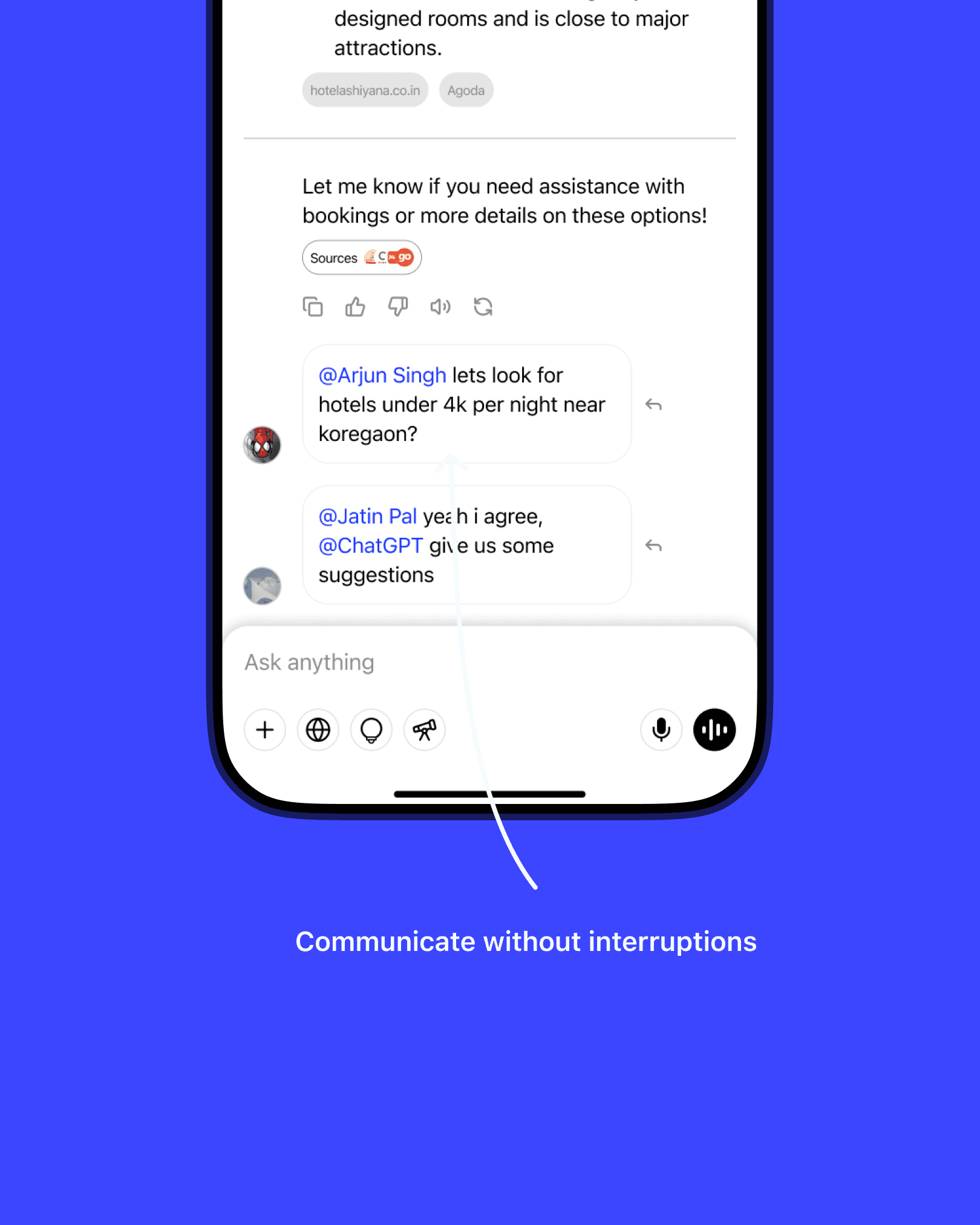
Smart Mention Architecture: Introduced a strategic @mention system to manage group chaos. Users can tag each other (@username) to discuss ideas without triggering the AI, and tag the AI (@ChatGPT) to execute prompts while maintaining full group context.
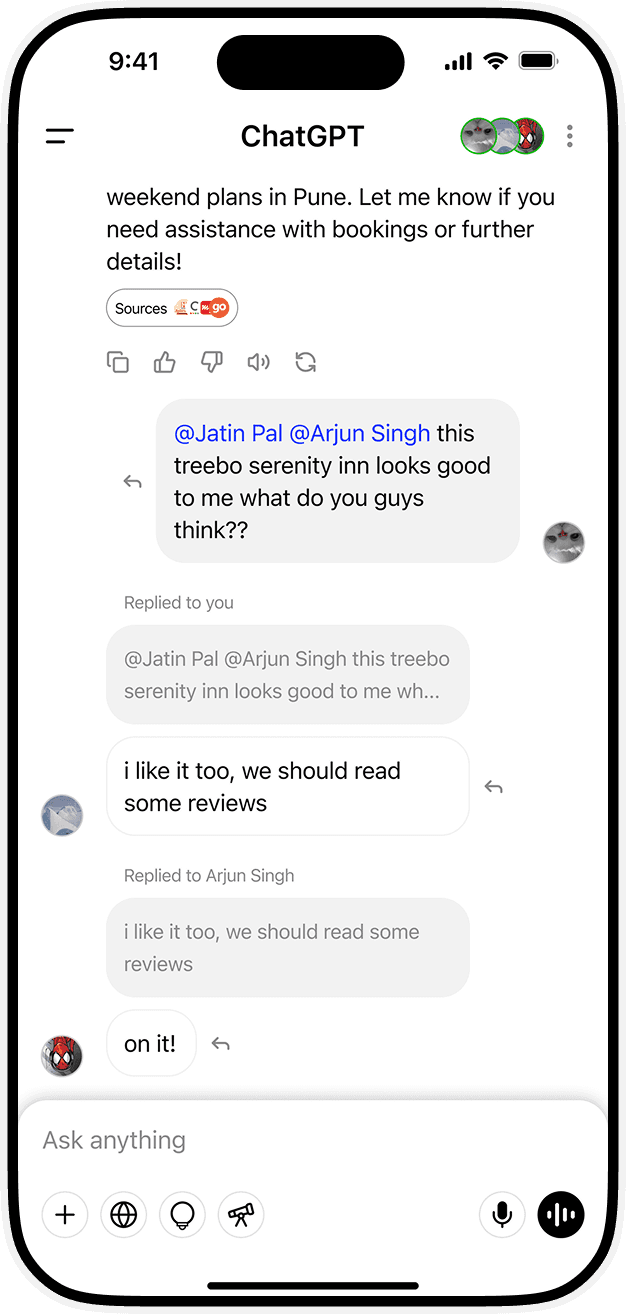
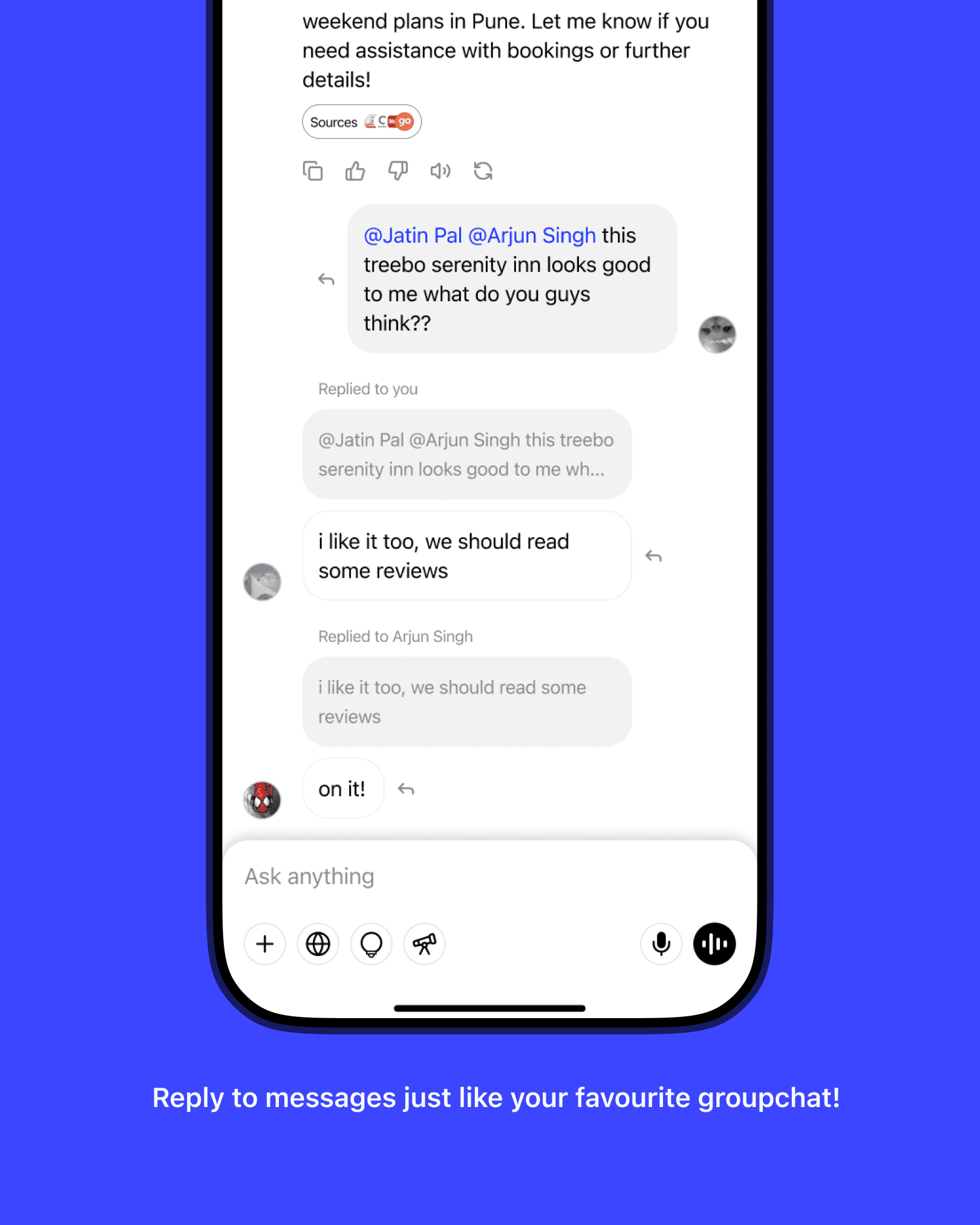
Users can tag each other using @username or reply to messages to chat without triggering ChatGPT.
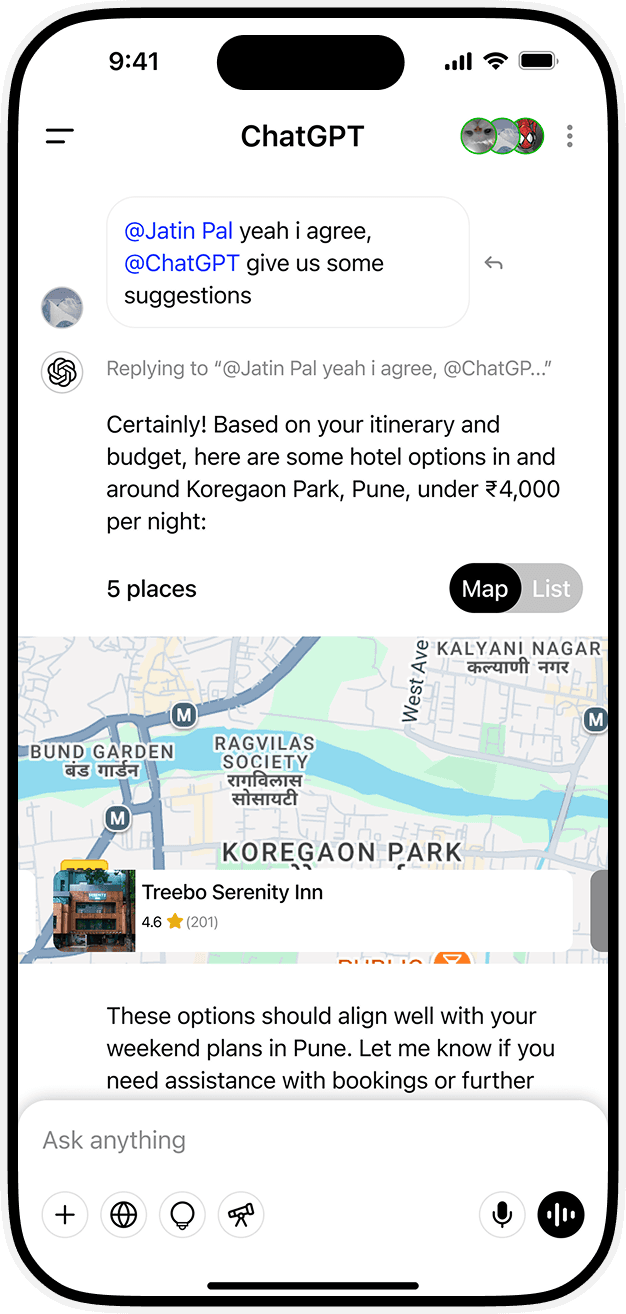
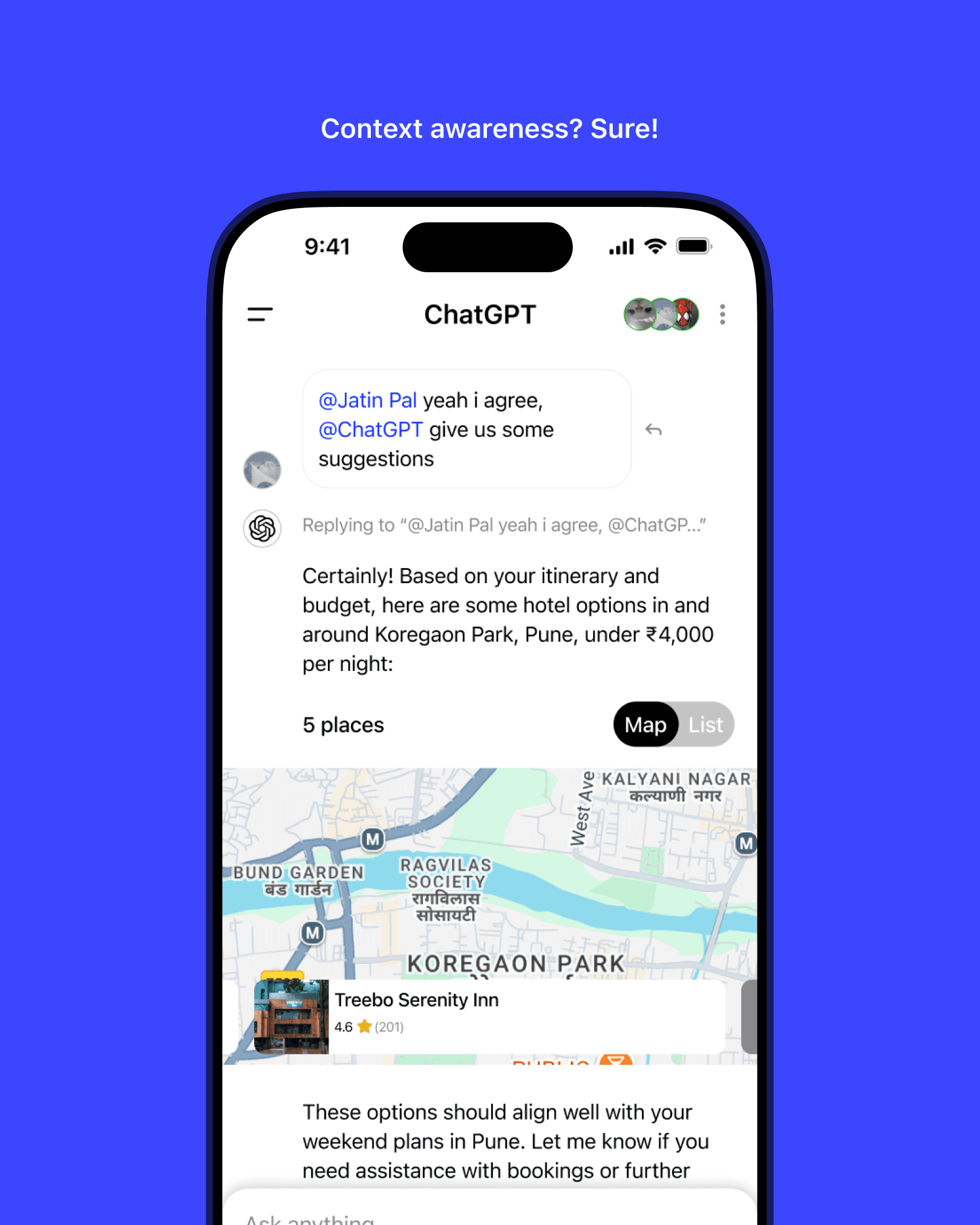
When users want a response from the AI, they can tag @ChatGPT directly.
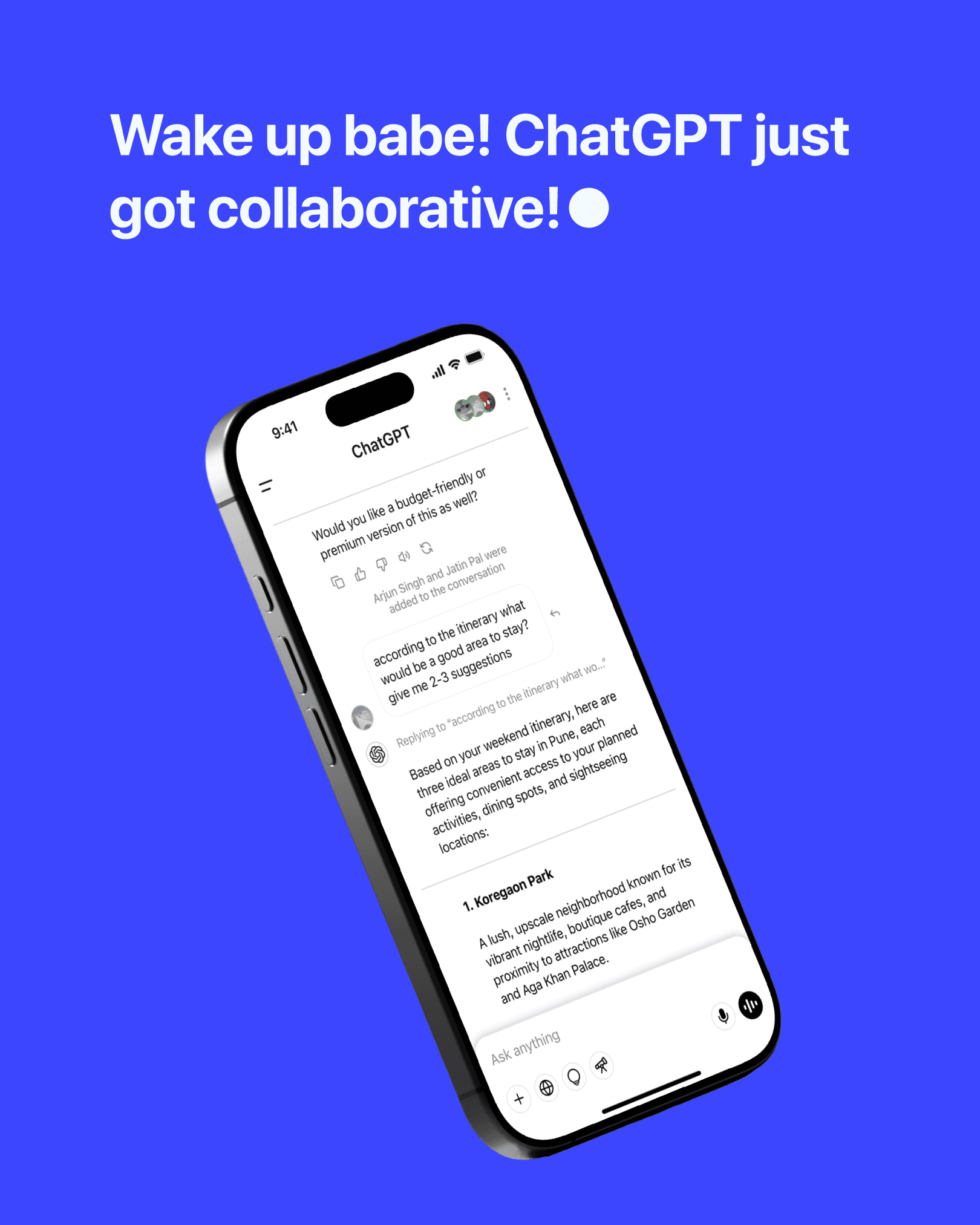
It always preserves context of the chat.
When ChatGPT responds, it highlights the message it’s replying to, keeping the conversation easy to follow.
Seamless Integration: Built entirely from scratch, the UI perfectly mimics ChatGPT’s existing design system while incorporating established group-chat mental models (like WhatsApp) so the feature feels natively built-in rather than bolted on.
Outcome
By respecting the product's foundational constraints, TeamGPT demonstrates how complex, multiplayer AI interactions can be integrated intuitively without disrupting the core user experience.